
The best roofing materials for hot California climates are standing-seam metal, clay or concrete tile, and cool-rated asphalt shingles - in that order for pure heat performance. Metal and tile handle 100°F-plus afternoons and decades of UV without warping or cracking, while cool-rated asphalt shingles deliver the best cost-to-performance ratio for most homes. The rest of this post breaks down how each material actually behaves in California sun, what it costs in 2026, and the mistakes that cut a roof's life in half.
Best roofing materials for hot California climates is a category of roof coverings engineered to reflect solar radiation, resist thermal expansion, and hold their color and structure through decades of dry heat. If you live anywhere from the San Fernando Valley to the Inland Empire, the material on your roof is working harder than it would in almost any other U.S. climate.
What makes a roofing material work in California heat
Three properties decide whether a roof survives California heat: solar reflectance, thermal emissivity, and expansion tolerance. Solar reflectance is how much sunlight the surface bounces back instead of absorbing. Thermal emissivity is how quickly it releases the heat it does absorb. Expansion tolerance is how well the material handles the daily cycle of 40°F mornings and 105°F afternoons without cracking at seams.
California's Title 24 Building Energy Efficiency Standards push manufacturers toward cool-rated products, and the difference is measurable. A standard dark asphalt shingle can hit 160°F on the surface during a July afternoon in the Valley. A cool-rated shingle of the same color runs 20°F to 30°F cooler, and a white reflective membrane can stay under 110°F. That heat difference moves straight into your attic and your utility bill.
We install and service Roofing in California across Los Angeles County and the surrounding valleys, so we see how each material ages under real conditions rather than lab numbers. Here's what holds up.
Metal roofing: the top performer in direct sun
Standing-seam metal roofing is the single best-performing roof covering for hot California climates, and it's not close. The interlocking panels have no exposed fasteners, no granules to shed, and a factory-applied finish that carries a 30- to 40-year warranty against fade and chalk.
Reflectivity is the headline. A painted steel or aluminum panel with a cool-roof coating reflects 50% to 70% of solar radiation, compared to 5% to 25% for a standard dark shingle. That translates to attic temperatures 15°F to 25°F lower on a 100°F day. Metal also sheds heat fast once the sun drops, which matters in the Valley where evening temps stay above 85°F well past sunset.
Cost in 2026 runs $9 to $16 per square foot installed for standing-seam steel, and $12 to $20 for aluminum or copper. That's roughly two to three times the cost of asphalt, but the service life is 40 to 70 years versus 15 to 25. If you're planning to stay in your home, the math works. If you're selling in five years, it usually doesn't.
One caveat specific to California: metal is loud in hail and rain, and it expands and contracts more than any other material. That's fine when it's installed with the right clip system and thermal breaks. It's a problem when it's screwed down tight by a crew that doesn't do metal every week. We handle Metal Roofing in California with concealed clips and expansion-tolerant seams so the panels can move without backing out fasteners.
Clay and concrete tile: the long-haul choice
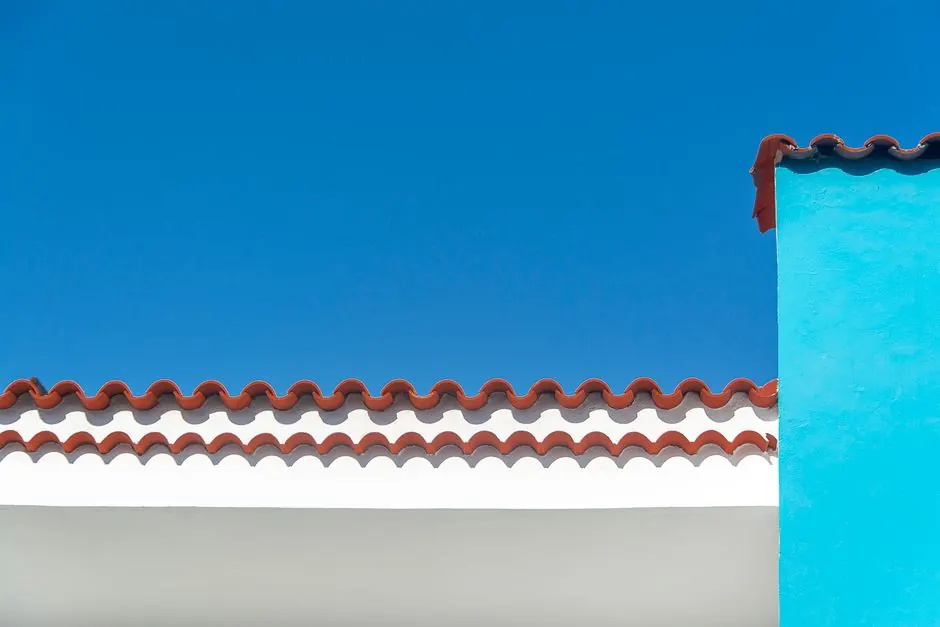
Clay and concrete tile are the traditional answer to California heat, and for good reason - they've been on Spanish Colonial roofs in Los Angeles for a century and many of those roofs are still watertight. Tile is inert. It doesn't rust, rot, or burn, and it holds its color through UV exposure that would fade almost anything else.
The thermal mass is the trick. Tile heats up slowly during the day and releases that heat slowly after dark, which flattens out the attic temperature curve. A tile roof over a properly ventilated attic can cut peak cooling load by 10% to 20% compared to a dark asphalt roof of the same pitch.
Cost in 2026 is $10 to $18 per square foot installed for concrete tile and $15 to $25 for clay. Lifespan is 50-plus years for the tile itself, though the underlayment beneath it needs replacement every 20 to 30 years. That's the part most homeowners miss - the tile outlives the waterproofing layer, and re-roofing a tile roof usually means pulling the tile, replacing the underlayment, and re-laying the tile.
Tile is heavy. A tile roof weighs 800 to 1,200 pounds per square, versus 200 to 350 for asphalt. If your home wasn't framed for tile, a structural review comes first. We check that before we quote Roof Installation in California on any tile project.
Cool-rated asphalt shingles: the value pick
Cool-rated asphalt shingles are the best roof for hot climate California budgets - they deliver most of the reflectivity benefit at a fraction of the metal or tile price. These are standard fiberglass-mat shingles with reflective granules that bounce solar energy instead of absorbing it.
Cost in 2026 is $5 to $9 per square foot installed, including tear-off of the old roof and new underlayment. Lifespan is 20 to 30 years for a premium architectural shingle, less for a builder-grade three-tab. The cool-rated versions cost $200 to $600 more per roof than standard shingles, and they typically pay that back in three to seven years through lower cooling costs in a hot inland climate.
Look for the CRRC (Cool Roof Rating Council) label and a solar reflectance index (SRI) of at least 16 for steep-slope roofs. That's the Title 24 threshold for most California climate zones. A shingle with an SRI of 30 or higher is worth the upgrade if your attic runs hot.
Asphalt is also the easiest material to repair. A cracked or blown-off shingle is a same-day fix, not a specialty order. We do a lot of Asphalt Shingle Roofing in California for exactly that reason - it's the material most homeowners can actually maintain without a second mortgage.
Flat and low-slope systems for hot inland valleys
Flat and low-slope roofs need a different answer because shingles and tile don't work below a 2:12 pitch. In the San Fernando Valley, where a huge share of mid-century homes have flat or near-flat roofs, the practical options are modified bitumen, TPO, and spray polyurethane foam.
TPO (thermoplastic polyolefin) is the current standard for cool flat roofing. A white 60-mil TPO membrane has an initial solar reflectance of 0.78 and stays above 0.70 after three years of weathering. Installed cost in 2026 is $8 to $14 per square foot, and lifespan is 15 to 25 years.
Spray foam is the other strong option for hot climates. It's seamless, adds R-value directly to the roof deck, and reflects well when coated. Cost is $9 to $18 per square foot with a protective coating, and the coating needs reapplication every 10 to 15 years. We install both, and we'll tell you which one fits your deck and drainage rather than pushing whichever is easier. Our Flat Roofing in California crews work on both residential and small commercial decks.
How to choose roofing material for California heat
Choosing a roofing material for California heat comes down to four variables: how long you'll own the home, your budget, your roof pitch, and how much you care about cooling costs. Work through them in that order and the decision usually makes itself.
- Staying 20+ years: metal or tile. The upfront cost is higher, but the per-year cost is lower than re-roofing twice with asphalt.
- Staying 5-10 years: cool-rated architectural shingles. Best resale value per dollar in most California markets.
- Flat or low-slope roof: white TPO or coated spray foam. Shingles are not an option below 2:12 pitch.
- Attic runs above 130°F in summer: prioritize SRI over color. A light-colored cool roof can drop attic temps 20°F or more.
One more factor that doesn't get enough attention: ventilation. A cool roof on a poorly ventilated attic still traps heat. We check intake and exhaust venting on every estimate because it changes the performance of whatever material you pick.
Common mistakes that shorten roof life in the heat
The most expensive roofing mistakes in California heat are the ones that look like savings upfront. Here's what we see on inspections every week.
- Choosing color over rating. A dark shingle with a high SRI beats a light shingle with a low one. Check the CRRC rating, not the color swatch.
- Skipping the underlayment upgrade. Standard felt underlayment dries out and cracks in 10 to 15 years under a tile roof. Synthetic underlayment lasts 25 to 30. The upgrade costs a few hundred dollars and saves thousands.
- Ignoring attic ventilation. A hot attic cooks the underside of the roof deck. Without balanced intake and exhaust, even a premium roof ages twice as fast.
- Letting a small leak ride. In a dry climate, a small leak can stay hidden for months, then show up as rotted sheathing after the first winter rain. We handle Roof Leak Repair in California year-round, and the earlier we get to it, the smaller the repair.
- Hiring on price alone. The cheapest bid usually means no permit, no underlayment upgrade, and no ventilation work. That roof fails in eight years instead of twenty.
We see these patterns across the Valley - in older Roofing in Canoga Park where 1950s flat roofs are hitting the end of their second decade, and in newer hillside builds where ventilation was an afterthought.
When to call a professional
Call a roofer when you see curling or missing shingles, granules collecting in your gutters, daylight through the attic boards, or a ceiling stain that appears after rain. Those are signs the roof is past its service life, not just dirty.
Also call if your attic stays above 130°F on a summer afternoon even with the AC running. That's a sign your roof is absorbing more heat than it should, and a cool-roof upgrade may pay for itself faster than you expect. Our team at RoofPros California handles inspections, repairs, and full replacements across Los Angeles County. We'll tell you what the roof actually needs - repair, maintenance, or replacement - before you spend a dollar.
Frequently Asked Questions
What is the best roofing material for hot California climate?
Standing-seam metal is the best performer, reflecting 50% to 70% of solar radiation and lasting 40 to 70 years. Clay or concrete tile is a close second with a 50-year lifespan. Cool-rated asphalt shingles are the best value, costing $5 to $9 per square foot installed.
Do cool roofs work in California?
Yes. Cool roofs cut peak attic temperatures by 15°F to 30°F and reduce cooling costs 10% to 20% in inland California climates. Title 24 requires cool-rated products on most steep-slope re-roofs, and the CRRC label confirms the rating.
What roofing material lasts longest in California heat?
Metal and clay tile last longest, at 40 to 70 years and 50-plus years respectively. Concrete tile runs 50 years. Premium cool-rated asphalt shingles last 20 to 30 years. The underlayment beneath tile needs replacement every 20 to 30 years regardless.
How to reduce roof heat in California?
Install a cool-rated roof with an SRI of 16 or higher, add balanced attic ventilation, and consider a radiant barrier in the attic. These three steps can drop attic temperatures 20°F to 30°F and cut cooling costs noticeably during July and August.
How much does a new roof cost in California in 2026?
Asphalt shingles run $5 to $9 per square foot installed, metal $9 to $20, and tile $10 to $25. A typical 1,800-square-foot ranch roof costs $9,000 to $16,000 with cool-rated shingles, or $18,000 to $35,000 with metal or tile.
Get help with Roofing in California
If your roof is struggling through another California summer, we can tell you in one visit whether it needs a repair, a cool-roof upgrade, or a full replacement. Call RoofPros California at (877) 409-4846 and we'll schedule an inspection at your home.