
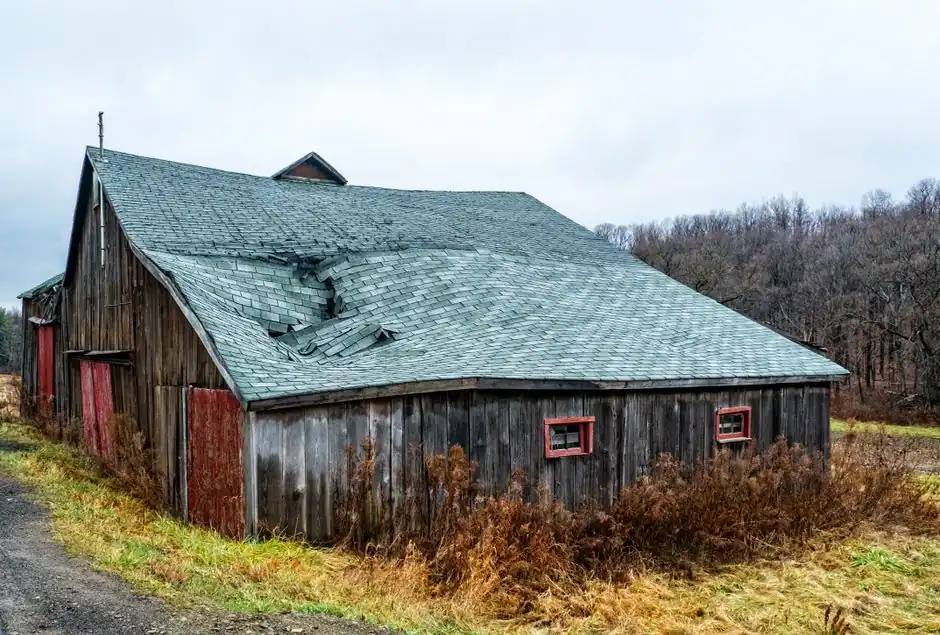
Your shingles are curling and cracking because the California sun has baked the asphalt binder out of them. Asphalt shingles are made with a thin layer of asphalt that holds the mineral granules in place, and after years of UV exposure and daily heat swings, that asphalt dries out, shrinks, and loses its grip. Once the edges lift, the shingle can no longer flex with the roof deck, so the next hot afternoon cracks it.
We're RoofPros California, and we've pulled enough sun-damaged shingles off San Fernando Valley and South Bay roofs to know the pattern. Here's what's actually happening up there, what it costs to fix in 2026, and how to slow it down before your next roof replacement.
The short answer: heat, UV, and thermal cycling
Why are my shingles curling and cracking in the California sun is really a question about three forces working together: ultraviolet radiation, sustained heat, and thermal cycling. UV light breaks down the asphalt at a molecular level. Heat softens it. Then the temperature swing from a 95°F afternoon to a 60°F night hardens it again. Do that 300-plus times a year and the shingle loses its elasticity.
Curling is the visible symptom. The shingle edge lifts because the top surface has shrunk while the bottom stayed the same size. Cracking comes next, usually along the curl line or at the nail heads where stress concentrates.
This is not a defect in the shingle. It's the material doing exactly what asphalt does when it's exposed to this climate. The only real variables are how fast it happens and whether you catch it early enough to repair instead of replace.
How California sun damages asphalt shingles
California sun damages shingles in a specific sequence, and knowing the sequence tells you how much life is left. It starts with granule loss. Those little grey and black granules are the shingle's sunscreen. When they wash into your gutters, the asphalt underneath is now exposed to direct UV.
Next comes the drying phase. Asphalt is a petroleum product, and the lighter oils that keep it pliable evaporate over time. On a south- or west-facing slope in Los Angeles, that process runs two to three times faster than on a north-facing slope. We routinely see a 15-year-old roof where the south slope looks 20 and the north slope looks 8.
Then the thermal cycling kicks in. A dark asphalt roof surface can hit 150°F to 160°F on a 95°F day. As it cools overnight, the shingle contracts. The nails holding it don't move. That mismatch is what pops the shingle edges up and eventually tears the mat.
If your roof also has poor attic ventilation, the deck underneath stays hot well into the evening, and the shingles never get a chance to fully relax. That's why two houses on the same street, built the same year, can have completely different shingle life.
Signs of sun damage on roof in California
Signs of sun damage on roof in California show up long before you have a leak. The trick is knowing which ones mean "schedule maintenance" and which ones mean "call us today."
- Curled or cupped edges - the corners lift like a potato chip. Early stage, often repairable.
- Hairline cracks - usually run parallel to the shingle's long edge. Mid-stage.
- Bald patches - granules gone, asphalt showing. Late stage.
- Granules in gutters and at downspout outlets - the earliest warning sign there is.
- Shingles that crack when you press them - if a shingle snaps instead of bending, the mat is done.
- Dark streaks or a chalky grey tint - UV breakdown plus algae, common on shaded north slopes.
One curled shingle is not a crisis. Twenty curled shingles on one slope is a pattern, and patterns mean the whole slope is aging at the same rate. That's when a targeted Roof Repair in California stops being cost-effective and a full slope replacement starts making more sense.
How long do shingles last in California sun?
Shingles in California sun last 12 to 18 years on a hot south- or west-facing slope, even when the manufacturer rated them for 25 or 30. On a shaded north slope in the same climate, the same shingle can hit 20 to 25 years. The rating on the wrapper assumes a national average, not a San Fernando Valley summer.
Three factors move that number up or down:
- Orientation. South and west slopes take the worst of the afternoon sun.
- Ventilation. A properly vented attic can add 3 to 5 years to shingle life.
- Shingle grade. A 3-tab shingle is thinner than an architectural shingle and typically fails 4 to 6 years sooner in this climate.
If your roof is past year 12 and you're seeing consistent curling, you're in the window where a Roof Inspection in California pays for itself. We can tell you whether you have two years left or ten, and that changes the math on repair versus replacement.
Can curling shingles be repaired in California?
Curling shingles can be repaired in California when the curl is limited to a small area and the underlying mat is still intact. If the shingle still bends without snapping and the surrounding shingles are flat, we can remove the damaged pieces, replace them, and re-seal the field.
What you cannot do is flatten a curled shingle back down and call it fixed. Once the asphalt has shrunk, it stays shrunk. Any roofer who offers to "press them back down" is selling you a callback.
Typical 2026 pricing in this area:
- Small repair, 1 to 2 squares: $450 to $900
- Partial slope replacement, 4 to 6 squares: $1,400 to $2,800
- Full roof replacement, 20 to 30 squares: $9,500 to $18,000, depending on pitch, layers, and material
Those numbers move with access. A two-story home with a steep pitch and a tile roof underneath takes longer than a single-story ranch with a clean tear-off, and labor is the biggest line item.
How to prevent shingle damage from California sun
How to prevent shingle damage from California sun comes down to reducing heat and catching granule loss early. You can't stop the sun. You can slow what it does to the roof.
Start with ventilation. If your attic hits 140°F in July, your shingles are cooking from both sides. Ridge vents, soffit vents, and a properly sized exhaust can drop attic temps 20°F to 30°F, and that alone adds years.
Next, keep the roof clean. Debris in valleys and behind chimneys holds moisture against the shingle and accelerates the breakdown. Twice-a-year blow-offs, once in spring and once in fall, are enough in most of Southern California.
Then, schedule a professional Roof Maintenance in California visit every 24 months. We replace lifted shingles, re-seal exposed nail heads, clear the valleys, and check the flashing. It's a few hundred dollars, and it's the cheapest way to push a roof toward year 20 instead of year 14.
If you're replacing anyway, ask about Asphalt Shingle Roofing in California with a higher-grade architectural shingle. The upgrade cost is usually 10 to 15 percent more than 3-tab, and the added thickness buys you real years in this climate.
Common mistakes we see on California roofs
Common mistakes on California roofs almost always come down to treating a sun-damaged roof like a leak problem. Homeowners wait for water on the ceiling, then call. By that point, the shingle damage has usually been visible for two or three years.
Here's what we run into most often:
- Painting over the problem. Roof coatings can buy a year or two on a flat roof, but on a pitched asphalt shingle roof they trap heat and make curling worse.
- Replacing only the cracked shingles. If the surrounding shingles are also curled, the new pieces will fail at the seams within a season.
- Ignoring the second layer. A lot of California homes have two layers of shingles. The bottom layer is usually the one that's actually failing, and you can't see it from the ground.
- Skipping the attic. If the attic isn't vented, no shingle on the market will last its full rated life.
- Waiting for a leak. By the time water comes through, you're paying for decking and possibly drywall, not just shingles.
We see this pattern across the Valley and the South Bay, but it's especially common on older homes in Roofing in Northridge and the surrounding neighborhoods, where a lot of 1960s and 1970s roofs are still on their original deck.
When to call a professional
Call a professional when you can see curling across more than one slope, when granules are collecting in your gutters faster than usual, or when your roof is past year 12 and you haven't had it looked at. Those are the three signals that separate "watch it" from "get an estimate."
Our team handles everything from a single-slope repair to a full tear-off and re-deck. We walk the roof, photograph what we find, and give you a straight answer on whether repair is worth it or whether you're throwing money at a roof that's already done. If you're in Los Angeles or anywhere in the surrounding areas and want a second opinion before you commit, we're happy to take a look.
We also handle the emergency side. If a cracked shingle turns into an active leak during a fall rainstorm, our Emergency Roofing Services in California crew can tarp and stabilize the roof so the damage stops spreading while we schedule the permanent fix.
Frequently Asked Questions
Why do shingles curl and crack in California heat?
UV radiation breaks down the asphalt binder, and daily thermal cycling between hot afternoons and cool nights shrinks the shingle surface. After 10 to 15 years, the shingle can no longer flex, so the edges lift and the mat cracks. Poor attic ventilation speeds this up by 3 to 5 years.
How to fix sun damaged shingles in California?
Small areas with intact mats can be repaired by replacing the damaged shingles and re-sealing the field, typically $450 to $900 in 2026. If curling covers a full slope, partial or full replacement is the only fix that lasts. Coatings and pressed-down shingles do not work on pitched roofs.
How long do shingles last in California sun?
Expect 12 to 18 years on hot south- and west-facing slopes, and 20 to 25 years on shaded north slopes. Manufacturer ratings of 25 to 30 years assume a national average climate, not a Southern California summer with 150°F roof surface temperatures.
Can curling shingles be repaired in California?
Yes, if the curl is limited to a small area and the shingles still bend without snapping. Once the mat is brittle or the curl covers a full slope, repair stops being cost-effective and replacement is the better call. A roof inspection tells you which side of that line you're on.
What are the first signs of sun damage on a roof in California?
Granules collecting in gutters and at downspout outlets are the earliest sign, usually 2 to 3 years before visible curling. Next comes a chalky or grey tint on sun-facing slopes, then curled edges, then hairline cracks along the shingle surface.
Get help with Roofing in California
If your shingles are curling and cracking, the roof is telling you it's in the back half of its life. We can tell you exactly how much time you have left and what it costs to fix it right. Call RoofPros California at (877) 409-4846 and we'll schedule a roof inspection at your home.